By Alistair Johnstone
Have you ever set a goal with genuine enthusiasm, only to find yourself abandoning it weeks later? You're not alone. The gap between intention and action is where most people get stuck — and it's where most self-help advice fails, because it focuses on motivation rather than structure.
The difference between people who achieve their goals and those who don't often comes down to one thing: accountability. Not willpower. Not talent. Not even the quality of the goal itself. Accountability.
Key Takeaways
- Accountability transforms private wishes into public commitments — and that shift is powerful
- Patterns that are invisible when you work alone become visible with a coach
- Consistent small actions, supported by accountability, compound into significant results
- Accountability builds self-trust, which is the foundation of lasting confidence
- The right accountability relationship is about curiosity and support, not shame or pressure
What Accountability Actually Is
Accountability isn't about punishment or shame. It's about creating a structure that supports you in following through on your commitments to yourself. It's one of the most powerful tools for personal growth — and it's at the heart of what I offer through lifestyle coaching.
The coaching industry in the UK is growing at 9% annually, and accountability is consistently cited as one of the primary reasons people seek a coach. Not because they don't know what to do. Because they know exactly what to do and still aren't doing it. That's the accountability gap.
The Accountability Triangle
Over years of working with clients, I've come to think of effective accountability as a triangle with three points: Commitment, Visibility, and Reflection.
Commitment is the goal or action you've agreed to take. Visibility is having someone else witness that commitment — which changes its psychological weight entirely. Reflection is the honest conversation about what happened and why, whether you followed through or not.
Most people only have the first point. They make commitments to themselves, in private, with no visibility and no structured reflection. That's why they keep starting over.
1. Accountability Creates Commitment
When you tell someone else about your goal, something shifts. Suddenly, it's no longer just a private wish — it's a public commitment. This simple act of sharing increases your likelihood of following through dramatically. Research from the Dominican University of California found that people who wrote down their goals and shared them with a committed accountability partner achieved significantly more than those who kept their goals private.
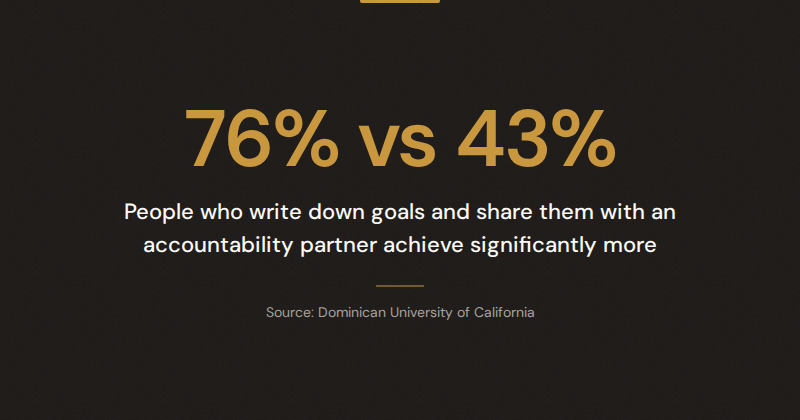
Why? Because accountability creates a sense of responsibility. You're not just answering to yourself anymore; you're answering to someone else. This external motivation, combined with your internal drive, creates a force that keeps you moving forward even when motivation wanes — and motivation always wanes eventually.
If you're not sure whether you're ready to make that kind of commitment, it's worth reading 5 signs you're ready for lifestyle coaching first. Readiness matters.
2. Accountability Reveals Your Patterns
When you work with an accountability partner or coach, patterns become visible. You might notice that you consistently self-sabotage before success, or that you make excuses when things get difficult, or that you prioritise others' needs over your own goals. These patterns are invisible when you're working alone, but they become clear when you're reporting to someone else.
This visibility is invaluable. You can't change what you don't see. Once you recognise your patterns, you can address them. Maybe you need to build in more support, adjust your approach, or work through the underlying beliefs that are holding you back.
Having worked with over 480 clients, I've seen the same patterns repeat across very different people. The self-sabotage before the finish line. The sudden "busyness" when things get real. The way people shrink their goals rather than address the fear underneath them. Accountability makes these patterns visible — and visible patterns can be changed.
3. Accountability Provides Structure and Consistency
Goals are achieved through consistent action, not sporadic bursts of effort. 76% of UK workers report experiencing burnout symptoms — often because they're working hard in the wrong direction, without structure or clear priorities. Accountability provides the structure that keeps you consistent.
Regular check-ins with a coach create a rhythm that supports ongoing progress. You know you'll be reporting on your progress, so you're more likely to take action between sessions. This consistency compounds over time. Small actions, repeated consistently, lead to significant results. If you are rebuilding after a high-pressure period, resilience coaching is a strong companion approach.
This is exactly what goal planning and achievement coaching is built around — not just setting goals, but building the structures that make following through automatic rather than effortful.
If action delay is your main obstacle, read how to stop procrastinating.
4. Accountability Builds Confidence
Each time you follow through on a commitment — no matter how small — you build confidence in yourself. You prove to yourself that you can do what you say you'll do. This self-trust is foundational. When you trust yourself, you're more willing to set bigger goals, take bigger risks, and pursue bigger dreams.
Accountability accelerates this process. By regularly following through on commitments and having that progress witnessed and acknowledged, you build confidence faster. You start to see yourself as someone who achieves their goals — and that identity shift is powerful.
This is the deeper work of personal development coaching: not just achieving specific goals, but becoming the kind of person who consistently follows through. The goals are almost secondary to that identity shift.
5. Accountability Provides Support and Perspective
When you're in the thick of pursuing a goal, it's easy to lose perspective. You might be discouraged by a setback, or you might be pushing too hard and burning out. An accountability partner or coach provides an outside perspective. They can help you see what's working, what isn't, and what adjustments might help.
They also provide emotional support. Pursuing meaningful goals is challenging. Having someone in your corner who believes in you and is invested in your success makes the process less lonely and more sustainable. This support is especially valuable when you hit obstacles or face self-doubt.
91% of UK adults reported experiencing high levels of stress in 2025. Most of them are navigating that stress alone. Accountability coaching changes that equation.
6. Accountability Accelerates Growth
Perhaps most importantly, accountability accelerates your growth. When you're working alone, progress can feel slow. You might spend months or years working on the same issues without significant breakthrough. With accountability, you move faster. You get feedback sooner, you adjust your approach more quickly, and you build momentum.
This acceleration isn't just about speed — it's about depth. With accountability, you go deeper into your work. You're more willing to be honest about your struggles, more open to feedback, and more committed to real change rather than surface-level improvements.
I've been working with clients for well over a decade, and the single most consistent finding is this: people who have structured accountability achieve more in three months than they typically achieve in a year on their own. That's not a sales pitch — it's just what I've observed, repeatedly. For a direct example of how this lands in men's work, life coaching for men shows the same pattern in practice.
Finding the Right Accountability
The most effective accountability comes from working with someone who is trained to support your growth. Not a friend who'll let you off the hook. Not a family member who has their own agenda. A coach who is genuinely invested in your progress and skilled at asking the questions that matter.
Accountability isn't about someone pushing you or making you feel bad. It's about having a partner who believes in your potential, who asks the right questions, and who helps you stay focused on what matters most. It's about creating a relationship where you feel safe being honest about your struggles and supported in overcoming them.
If you've been struggling to achieve your goals on your own, accountability coaching might be exactly what you need. You can learn more about my approach on the about page, or explore personal development coaching to see how structured accountability works in practice.
Frequently Asked Questions
What is accountability coaching?
Accountability coaching is a structured coaching relationship where a coach helps you set clear commitments, follow through on them, and understand why you don't when you don't. It's not about being told off — it's about having someone in your corner who takes your goals as seriously as you do.
How does an accountability partner help?
An accountability partner — especially a trained coach — helps by making your commitments visible, asking the right questions when you fall short, and helping you understand the patterns that cause you to self-sabotage. The external perspective is what makes the difference.
Can I hold myself accountable without a coach?
To a degree, yes. Journalling, habit trackers, and self-reflection all help. But research consistently shows that people who share their goals with a committed accountability partner are significantly more likely to achieve them. The gap between self-accountability and coached accountability is real.
How often should I check in with a coach?
Weekly sessions work best for most people — they're frequent enough to maintain momentum but spaced enough to allow real progress between sessions. Some people do bi-weekly. What matters most is consistency, not frequency.
Is accountability coaching the same as being nagged?
Not at all. Good accountability coaching is about curiosity, not criticism. When you don't follow through, the question isn't "why didn't you do it?" — it's "what got in the way, and what does that tell us?" The goal is understanding, not shame.
Ready to experience the power of accountability? Book your initial session — one hour, honest conversation, and a clear picture of what's actually getting in your way. Your breakthrough is closer than you think.