By Alistair Johnstone
If you searched how to stop procrastinating, you are probably frustrated with yourself.
You know what needs doing. You might even want the result badly. But somehow you delay, distract, and then beat yourself up at the end of the day.
I want to be direct: procrastination is rarely laziness. It is usually fear wearing a disguise.
Fear of getting it wrong. Fear of being judged. Fear that your best effort still will not be enough.
Willpower alone does not solve that. Structure does.
Key takeaways
- Procrastination is often emotional avoidance, not poor character
- Starting small beats waiting to feel motivated
- Clear task design removes friction and overwhelm
- Accountability multiplies follow-through
- Consistency matters more than intensity
Why procrastination costs more than people realise
Procrastination is not just about unfinished to-do lists. It has real performance and wellbeing costs.
In its UK employer analysis, Deloitte estimates that presenteeism contributes around £24 billion of annual productivity loss linked to poor mental health. In other words, people are often physically at work but mentally blocked or depleted.
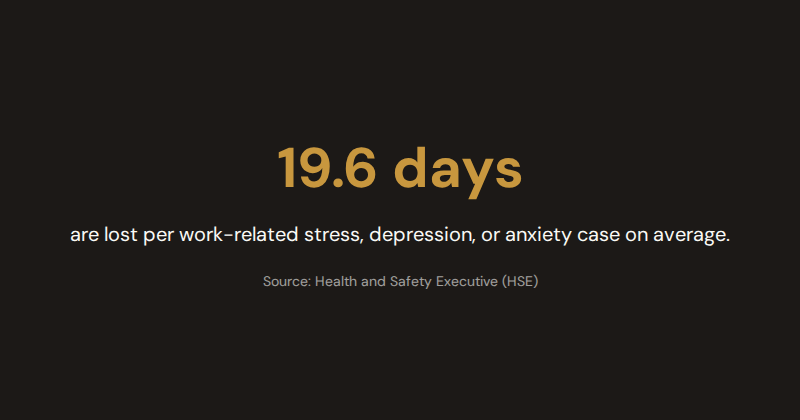
The HSE also reports that work-related stress, depression, and anxiety cases can lead to roughly 19.6 days lost per case on average in recent reporting. Delayed action and unresolved pressure add up.
If you are trying to learn how to stop procrastinating, this matters: avoidance is expensive.
Step 1: Diagnose the real trigger behind delay
Most procrastination advice jumps straight to productivity apps.
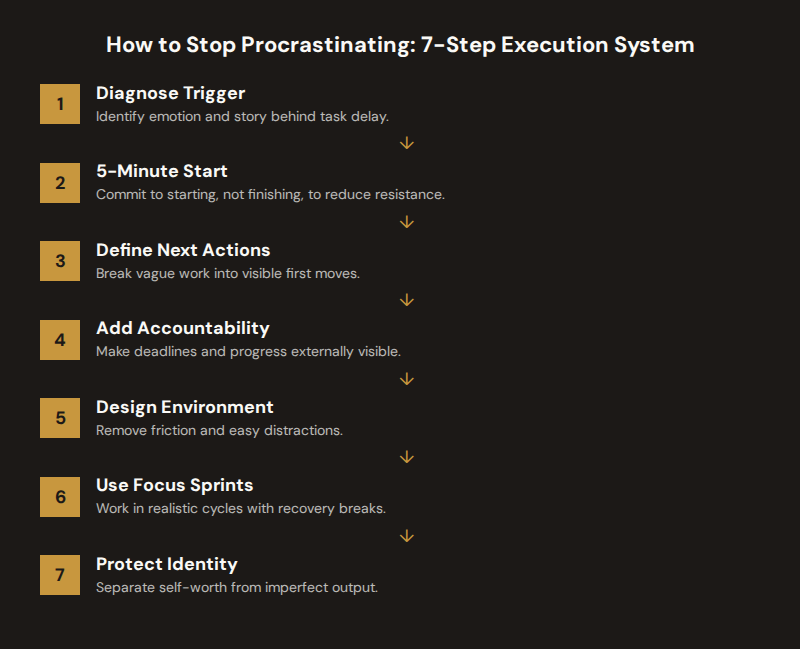
Start with trigger diagnosis first.
Ask:
- What task am I avoiding?
- What feeling appears when I think about starting?
- What story is attached to that feeling?
Common patterns:
- "If it is not perfect, I will look incompetent"
- "This is too big; I do not know where to start"
- "If I commit, I might fail publicly"
Until you identify the emotional trigger, you will keep treating symptoms.
The avoidance map
Create a quick map in your notes:
- task
- trigger emotion
- avoidance behaviour (scrolling, tidying, overplanning)
- smallest next action
This gives you leverage.
Step 2: Use the five-minute start rule
If you want how to stop procrastinating to become practical, use this immediately.
Commit to five minutes only.
Not one hour. Not "finish everything". Five minutes.
Why it works:
- lowers perceived threat
- removes perfection pressure
- creates momentum through action
Start script:
"I am not finishing this now. I am only starting for five minutes."
Once started, continue if you can. If not, stop intentionally and schedule the next five-minute block.
The point is building the identity of someone who starts.
Step 3: Break work into outcome-neutral next actions
Vague tasks create procrastination.
Compare:
- "Work on proposal" (vague)
- "Draft opening paragraph and bullet three client outcomes" (clear)
For each important task, define:
- first visible action
- first completion marker
- next checkpoint
Example
Task: prepare presentation
- open slides and write title
- draft three core points
- create one supporting example
This turns a mountain into a staircase.
If mindset blocks are persistent, mindset coach explains how identity and action loops interact.
Step 4: Use accountability before motivation
Motivation is unreliable. Accountability is dependable.
If you are still searching how to stop procrastinating, this is often the missing piece.
Build one accountability layer:
- daily check-in with a colleague or friend
- shared progress board
- public deadline with a clear deliverable
- weekly review call
You are not weak for needing external structure. High performers use it deliberately.
For a deeper system, read power of accountability.
Step 5: Design your environment to reduce avoidance
Willpower is overrated when your environment is noisy.
Use friction design:
- remove distracting tabs before starting
- keep your phone out of reach during focus blocks
- prepare your workspace the night before
- start with your hardest meaningful task
You want the right action to be easier than the wrong one.
Step 6: Run focus sprints with recovery built in
Many people procrastinate because they try to work like machines.
Use realistic cycles:
- 30-45 minutes focused work
- 5-10 minutes recovery
- repeat 3-4 rounds
During recovery:
- stand up
- hydrate
- brief movement
This protects energy and keeps your brain engaged.
Step 7: Separate your worth from your output
A hidden procrastination driver is identity threat.
If every task feels like proof of your value, delay becomes self-protection.
Practise this:
- "This task reflects my effort, not my entire worth"
- "Progress today counts, even if imperfect"
You will start faster when your nervous system is not defending your identity every time you open your laptop.
For broader growth patterns, personal development coach may help.
A 10-day anti-procrastination protocol
To make how to stop procrastinating stick, run this protocol:
Day 1-2
- create avoidance map for top three delayed tasks
- apply five-minute start rule once daily
Day 3-5
- convert each major task into three next actions
- run two focus sprints per day
Day 6-8
- add one accountability layer
- complete one task you have delayed for weeks
Day 9-10
- review what caused delay and what reduced it
- lock in your weekly anti-procrastination routine
Do not aim for perfect productivity. Aim for reliable follow-through.
Common mistakes that keep procrastination alive
-
Planning endlessly instead of starting
- Planning can become disguised avoidance.
-
Setting unrealistic daily expectations
- Overload leads to shutdown.
-
Waiting for confidence first
- Confidence grows after action.
-
Using shame as fuel
- Shame drains energy and narrows thinking.
-
Ignoring anxiety and overthinking
- Emotional triggers need direct tools, not just tighter schedules.
What progress looks like in real life
Progress is not never procrastinating again.
Progress is:
- starting sooner
- recovering faster after avoidance
- completing more high-value work
- feeling less dread around hard tasks
- trusting yourself to follow through
Why intelligent people procrastinate more than expected
Many people assume procrastination comes from low ambition. Often the opposite is true.
High standards can create high resistance.
If your identity is tied to being capable, the thought of visible imperfection can feel threatening. So your brain delays action to avoid the possibility of "not good enough".
That is why people who search how to stop procrastinating are often thoughtful, conscientious, and hard on themselves.
Recognise these patterns:
- over-researching to avoid starting
- endless tool switching
- rewriting plans instead of executing
- waiting for an "ideal" window
These behaviours look productive, but they protect you from discomfort rather than moving work forward.
A practical anti-procrastination workflow for busy days
Use this when your calendar is full and resistance is high.
Morning (10 minutes)
- pick one high-value task
- define first three actions only
- schedule first focus block before checking low-priority messages
Midday reset (5 minutes)
- ask: "What am I avoiding right now?"
- reduce scope to a five-minute start
- restart with a timer
End-of-day close (10 minutes)
- list what moved forward
- capture one blocked task and next action
- calendar the first step for tomorrow
This keeps momentum alive even on imperfect days.
Scripts for the exact moment you want to delay
When resistance appears, your internal dialogue matters.
Use one of these:
- "I only need to begin, not finish."
- "Progress now beats perfection later."
- "Avoidance feels safe, but action builds trust."
- "Five minutes of focus is enough for this round."
These scripts are deliberately simple because complexity increases delay.
How to stop procrastinating when fear of judgement is the real issue
A lot of procrastination is social fear:
- fear people will criticise your work
- fear you will not meet expectations
- fear your effort will expose your limits
Try this three-part reframing:
- Name the feared judgement: "People will think this is weak"
- Name the cost of delay: "If I delay, quality and confidence both drop"
- Name the growth frame: "This draft is data, not identity"
Then submit the first version sooner than comfortable.
You do not build confidence by hiding drafts. You build it by shipping, learning, and iterating.
If procrastination is strongest at home
Some people execute brilliantly at work and stall at home.
Why?
- no external deadlines
- no accountability structure
- emotional fatigue after workday pressure
Home execution framework:
- choose one personal priority each evening
- set a visible start time
- remove one distraction in advance
- use 25-minute sprint + 5-minute break
- send proof of completion to accountability partner
This is particularly useful for habits like training, admin, budgeting, and personal projects.
The 30-day consistency challenge
If you want how to stop procrastinating to become a lifestyle, run this challenge:
Week 1: Start discipline
- five-minute start rule daily
- track starts, not completions
Week 2: Task design
- convert all major tasks into first three actions
- remove one major distraction from workspace
Week 3: Accountability
- daily check-in with one person
- report one completed meaningful action each day
Week 4: Identity shift
- review evidence of consistent starting
- write your "execution rules" for next month
- keep only the systems you actually followed
At the end, ask:
- Do I start faster?
- Do I avoid less?
- Do I trust myself more?
That is the real scoreboard.
If this is your main growth edge right now, do not aim to become perfect. Aim to become predictable. Predictable action compounds, and compounding action changes careers, health, relationships, and confidence faster than occasional bursts ever will.
If overthinking is a major blocker, pair this with how to stop overthinking.
Frequently asked questions
Why do I procrastinate even when I care about the task?
Because procrastination is often emotional avoidance. The task triggers discomfort, so your brain seeks short-term relief.
Is willpower enough to stop procrastinating?
Not for most people. Systems, task clarity, and accountability work better than motivation alone.
What is the quickest method to start?
Use the five-minute start rule. Commit to beginning for five minutes only.
How do I stop procrastinating at work?
Break tasks into clear next actions, use focus sprints, and make deadlines visible through accountability.
Is procrastination linked to anxiety?
Often yes. Anxiety and overthinking can drive avoidance, so addressing emotional triggers is key.
Working with a coach
If procrastination is repeatedly costing you time, confidence, or opportunities, coaching can help you build practical systems and accountability around execution. If you want support, you can book an initial session.