By Alistair Johnstone
If you are searching for a relationship coach UK service, you are probably not looking for theory. You want clarity on what this work is, whether it fits your situation, and whether it can genuinely improve your relationship rather than simply giving you another thing to read.
That is exactly what this guide is for.
I have worked with hundreds of clients across Scotland and the wider UK, including couples trying to reconnect and individuals trying to stop repeating the same painful pattern. The people who come to me are usually capable, thoughtful, and doing their best. They are not broken. They are just stuck in loops that good intentions alone have not fixed.
This approach is often misunderstood because it gets lumped in with everything from counselling to generic self-help. So let me be direct: coaching is structured, practical support that helps you change the way you relate, communicate, and choose.
Key Takeaways:
- This approach is practical and forward-focused, not vague or fluffy
- It helps both couples and individuals, including people whose partner will not attend
- A good coaching process targets communication, boundaries, conflict, and decision-making
- You should feel progress in day-to-day behaviour, not just insight in sessions
- If you want specific support, relationship consulting is where we do this work together
What Relationship Coaching Actually Is
This approach is a goal-oriented process where we identify what is not working in your relationships and build a plan to change it.
That can include:
- recurring arguments that never resolve
- poor communication under stress
- weak boundaries with partner, family, or ex-partners
- trust damage after dishonesty or repeated let-downs
- fear of intimacy, fear of conflict, or fear of being alone
- uncertainty about whether to stay, leave, or rebuild
In practical terms, coaching gives you a structure. We review real conversations, real behaviour, and real decisions. We identify the pattern underneath the symptom, then put specific actions in place between sessions.
The coaching profession has expanded significantly because more people are choosing this kind of accountability-led support. The ICF Global Coaching Study shows sustained growth in coaching engagement worldwide, including in the UK.
At the same time, pressure on modern relationships is rising. The HSE statistics overview continues to show high levels of work-related stress in Britain, and that stress rarely stays at work. It follows people home and lands in communication, patience, and emotional availability.
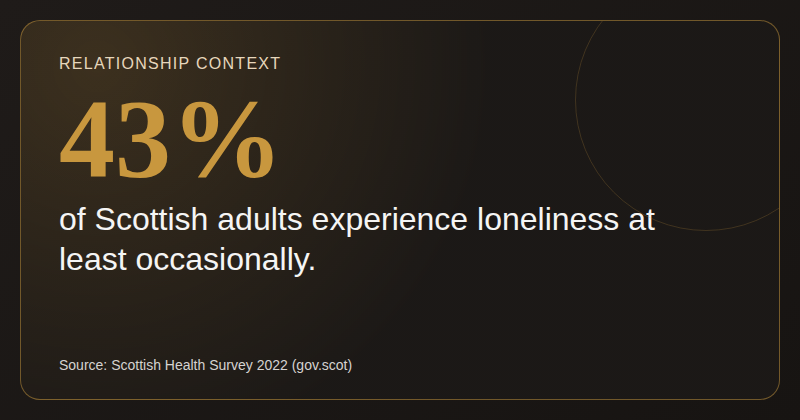
Add in loneliness and social disconnection, and it is no surprise people are actively seeking support with relationships. The Scottish Health Survey 2022 reports that 43% of adults felt lonely some of the time, occasionally, or often. The Campaign to End Loneliness also highlights how widespread this issue remains across the UK.
Who This Kind of Support Is For
1) Couples who are still committed but stuck
Many couples are not trying to split up. They are trying to stop hurting each other in the same ways every week. They care, but they keep missing each other in conversation.
In coaching, we focus on interaction patterns, not blame. For example:
- one partner pursues, the other withdraws
- criticism meets defensiveness
- conflict gets avoided until resentment builds
- practical logistics replace emotional connection
If this sounds familiar, this approach can help you rebuild trust and rhythm through small, repeatable changes.
2) Individuals in relationships who feel unseen or unheard
You do not need your partner in the room for this process to work. Individual clients often make major shifts by improving boundaries, communication clarity, and self-respect.
One person changing their behaviour can alter the entire dynamic.
3) People recovering from difficult relationship patterns
Some clients are rebuilding after emotionally draining relationships and want to make sure they do not return to the same dynamic. If that is you, read How to Rebuild After a Toxic Relationship as a companion piece. You may also find life coaching for women useful if confidence and boundaries are central themes.
I also recommend Coaching vs Therapy if you are deciding which type of support fits best right now.
4) High-performing professionals whose relationships are suffering quietly
The HSE statistics overview continues to highlight how common work-related stress is in Britain. I see the same pattern privately: people who are exceptional in business but exhausted and disconnected at home.
This is often where a relationship coach UK search begins: not because life is falling apart, but because success in one area is coming at the cost of connection in another.
What This Is Not
It is not a place to perform perfectly.
It is not endless talking with no behavioural change.
It is not me taking sides and deciding who is right.
It is not generic advice copied from social media.
And it is not about turning your relationship into some polished fantasy. It is about helping you build a relationship that is honest, stable, and emotionally safe enough to grow in.
If your goal is to become more grounded as a person while improving how you relate to others, my personal development coaching often works brilliantly alongside relationship work.
Coaching vs Couples Therapy
People ask this every week, so here is the simplest useful answer.
Couples therapy and this approach can both be valuable, but they are not identical.
- Couples therapy often explores emotional history and deeper therapeutic processing.
- Working with a coach is more action-led and future-focused.
- Therapy may spend more time understanding why patterns formed.
- Coaching spends more time changing what you do next.
In sessions, I am constantly asking: what specific behaviour changes this week? What conversation will you handle differently tonight? What boundary will you hold this month?
If you came here searching relationship coach UK, you are likely looking for practical movement, not just understanding. That is exactly where this approach shines.
What Sessions Look Like in Practice
A typical process with me includes:
- Clarity first: what is happening, what you want instead, and what keeps repeating.
- Pattern mapping: identifying triggers, protective behaviours, and communication breakdown points.
- Live strategy: scripts, frameworks, and boundary language you can use immediately.
- Accountability: clear commitments between sessions and honest review of what happened.
- Integration: making new behaviour stick under real pressure, not only when calm.
If you are a couple, we work on the relationship dynamic. If you are an individual, we work on your relationship choices, standards, and behaviour patterns so your next chapter is different.
Some clients start online; others prefer in-person sessions in Edinburgh or Glasgow. Either way, the quality of the work is in the structure, not the postcode.
When to Seek Support
You do not need to wait for a dramatic breaking point. In fact, earlier is usually better.
Consider working with a coach if:
- you keep having the same argument with different wording
- conflict now feels unsafe, so you avoid it and disconnect instead
- trust has dropped and you do not know how to rebuild it
- you are second-guessing yourself in ways that feel unfamiliar
- your standards are clear in your head but absent in your behaviour
- you want help making a grounded decision rather than an impulsive one
This is another reason people search for a relationship coach UK service with buyer intent: they are not browsing for entertainment, they are actively looking for a clear next step.
How to Choose the Right Coach in the UK
Not all coaching is equal. Before hiring anyone, check for:
- Clear methodology: can they explain exactly how they work?
- Track record: do they have real client outcomes, not just inspirational posts?
- Direct communication: do they challenge kindly, or just agree with everything?
- Practical focus: do sessions produce actions, not just ideas?
- Personal fit: do you feel understood, respected, and constructively challenged?
A good relationship coach UK professional should be able to explain what happens in session one, how progress is measured, and what success would look like in your life.
If you want to understand my background and approach before we speak, visit About.
The Results You Should Expect
Healthy coaching outcomes are measurable in daily life.
You should see:
- fewer reactive conversations and more constructive ones
- clearer boundaries and less resentment
- better repair after conflict
- stronger self-trust in relationship decisions
- consistency between what you say matters and how you act
If self-worth is the recurring pressure point, coaching for self-esteem is a practical next step.
Most importantly, you should feel more like yourself again.
Not louder. Not tougher. Just clearer and more grounded.
That is the standard I hold for every client who comes through my work.
Final Word
If you have read this far, you already know something needs to change.
You do not need another year of hoping the same pattern will magically fix itself.
You need a process.
You need honest support.
And you need action that matches the life and relationship you actually want.
If that is where you are, start with Relationship Consulting, then contact me here. We will have a straightforward conversation about what is happening, what needs to change, and whether working together is the right fit.
Frequently Asked Questions
What does this approach actually help with?
This approach helps with communication, boundaries, conflict, trust repair, and decision-making. It is practical support for creating different results in real conversations and daily behaviour.
Can coaching still help if my partner refuses to come?
Yes. Individual sessions can still create major change. When you communicate more clearly, hold healthier boundaries, and stop reinforcing old patterns, the relationship dynamic often shifts.
Is this approach only for couples on the brink?
No. Many people start early because they want to strengthen their relationship before things become entrenched. It is also valuable for individuals preparing for healthier relationships moving forward.
How many sessions do most people need?
It varies, but most clients notice meaningful momentum within 6-12 sessions when they apply the work consistently between sessions.
How do I know if I should get support now?
If you are repeating painful patterns, avoiding key conversations, or delaying decisions that affect your future, now is usually the right time. Waiting rarely improves communication on its own.
If you are ready for practical change, not more confusion, book your initial session. We will start with where you are and build from there.