By Alistair Johnstone
If you searched how to deal with stress at work, you are probably not looking for vague reminders to “manage your mindset”. You are looking for steps you can use in a real week with real deadlines.
I have worked with executives who had everything on paper and could not sleep at night. High income, senior title, full calendar — and a nervous system running on overdrive. Work stress is rarely about one bad day. It is about unmanaged load, unclear boundaries, and recovery that never properly happens.
This guide is for that reality.
Key Takeaways
- If you are searching how to deal with stress at work, start by reducing overload, not blaming yourself
- Workload and role clarity matter more than motivational slogans
- Stress reduces when priorities become explicit and finite
- Recovery is a work skill, not a luxury
- Small boundary changes can produce fast relief
What Work Stress Really Is
Work stress is a mismatch between demands and resources over time.
Demands include:
- volume
- pace
- emotional labour
- decision pressure
Resources include:
- time
- support
- autonomy
- recovery
When demands stay high and resources stay low, stress accumulates.
The HSE identifies workload as the most commonly reported cause of work-related stress, depression, or anxiety (around 44%), followed by lack of managerial support and violence/threats/bullying. That matters because it tells us where to intervene first.
In addition, the HSE reports 16.4 million working days lost in 2023/24 to stress, depression, and anxiety, showing the impact is operational, not just personal.
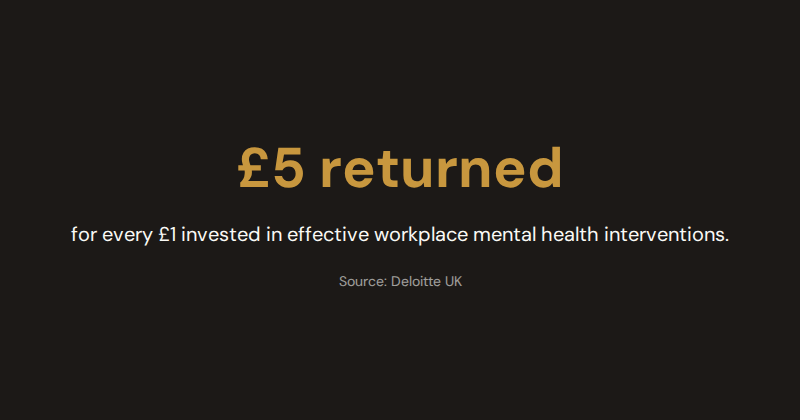
And investment in wellbeing has measurable value. Deloitte UK reports that effective workplace mental health interventions can return around £5 for every £1 invested.
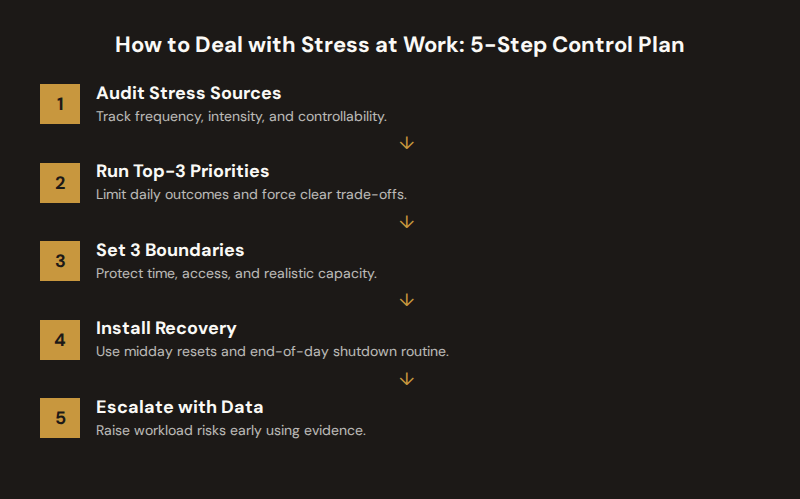
Step 1: Do a Stress Source Audit (Not a Mood Audit)
If you want to know how to deal with stress at work, first identify specific stress drivers.
Use this weekly table:
| Stressor | Frequency | Intensity (1-10) | Controllable? | Next Action | |---|---:|---:|---|---| | Back-to-back meetings | Daily | 8 | Partly | Protect 2 focus blocks | | Late requests | 3x/week | 7 | Yes | Set request cut-off time | | Unclear priorities | Daily | 9 | Yes | Weekly priority review with manager |
This shifts you from “I am stressed” to “these are the levers I can pull”.
Step 2: Run the Top-3 Priority System
Stress explodes when everything is labelled urgent.
Each morning, define:
- Top 3 outcomes for today
- Top 1 if the day goes wrong
Then communicate this clearly to stakeholders.
Script You Can Use
“To hit X by Friday, I am prioritising A, B, and C today. If D is now urgent, please confirm which of A-C should move.”
This is not confrontation. It is workload governance.
If you are constantly firefighting, your stress is often a systems issue, not a character flaw.
Step 3: Set Three Boundary Types
People searching how to deal with stress at work usually need boundaries more than they need more effort.
Set one boundary in each category:
1) Time Boundary
- no meetings in one protected focus block each day
2) Access Boundary
- notifications off during deep work
3) Capacity Boundary
- no new non-critical tasks without trade-off agreement
This reduces cognitive switching, which is one of the fastest stress multipliers.
Step 4: Build a Midday and End-of-Day Reset
Without recovery, stress compounds even when workload stays the same.
Midday Reset (10 minutes)
- step away from screen
- slow breathing (longer exhale)
- short walk or mobility
End-of-Day Shutdown (12 minutes)
- capture open loops
- define tomorrow’s first task
- close devices with intention
This prevents work stress from leaking into evening recovery.
Step 5: Escalate Early, Not Late
If stress remains high despite personal changes, escalate with data.
Bring:
- your stress source audit
- task volume evidence
- missed-recovery pattern
- practical options for redistribution
Do not wait until you are at breaking point.
I have seen too many high-performing people delay this conversation because they think asking for change looks weak. It does not. It looks responsible.
A Practical 30-Day Plan
If you are serious about how to deal with stress at work, use this timeline:
Week 1: Diagnose
- complete stress source audit daily
- identify top two stress drivers
Week 2: Protect
- implement top-3 priority system
- add one time boundary and one access boundary
Week 3: Recover
- add midday reset and shutdown routine
- track sleep and next-day energy
Week 4: Optimise
- escalate capacity issues with evidence
- keep what worked, remove what did not
This plan is designed for busy people, not ideal conditions.
Common Mistakes That Keep Work Stress High
- Trying to fix stress by working harder
- Saying yes before checking capacity
- Treating recovery as optional
- Keeping workload concerns vague
- Waiting too long to escalate
Avoiding these five mistakes often creates immediate relief.
When Stress and Burnout Overlap
Stress can become burnout when exhaustion stays high and engagement collapses.
If that sounds familiar, read how to deal with burnout and burnout coaching. If you want stress-specific structure, coaching for stress breaks down practical support options.
For wider wellbeing structure, how to improve your mental health complements this guide.
Final Action List for This Week
If you came here searching how to deal with stress at work, do these five things today:
- identify top two stress sources
- set tomorrow’s top three priorities
- block one focus session
- run one midday reset
- write a clear escalation note if capacity is exceeded
Simple, specific, repeatable.
Stress by Role: Adapt the Plan to Your Reality
One reason stress advice fails is that it ignores role differences.
If you are in leadership
Your stress often comes from decision load and emotional responsibility for others.
Practical focus:
- tighten decision windows
- reduce unnecessary approval loops
- set expectations on response times
If you are in individual contributor roles
Your stress often comes from unclear priorities and constant context switching.
Practical focus:
- protect deep-work blocks
- request ranked priorities in writing
- batch communication windows
If you are client-facing
Your stress often comes from emotional labour and unpredictability.
Practical focus:
- post-meeting decompression ritual
- clear case limits where possible
- stronger handover boundaries
Tailoring your system to your role is central to long-term success with how to deal with stress at work.
The Meeting Stress Reset
Meetings are a major stress amplifier when unmanaged.
Use these four rules:
- no meeting without agenda
- no meeting without owner
- no meeting without next action
- no meeting if an async update would do
Personally, I have seen stressed professionals reclaim hours each week with this one shift. Reclaimed time is recovered nervous system capacity.
The After-Hours Boundary Protocol
Work stress often continues because the working day never truly ends.
Use a two-step boundary:
Step 1: Communication expectation
Set and communicate your response windows.
Step 2: Shutdown cue
Use a fixed cue that ends work mode (walk, shower, notebook close, or short breathing sequence).
Without a cue, your body stays in anticipation mode.
If your evenings are chronically hijacked by work, this protocol is non-negotiable.
Scripts for Difficult Workload Conversations
You do not need aggressive language. You need clear language.
Script A: Priority conflict
"I can deliver A and B this week. If C is now urgent, which item should move?"
Script B: Unsustainable pace
"Current pace is affecting quality and sustainability. I want to agree a workable prioritisation plan before this escalates."
Script C: Need for support
"I am noticing repeated overload in these areas. Here are two options that would reduce risk and maintain output."
Clear scripts reduce anxiety before the conversation even starts.
A Weekly Stress Dashboard
Track these five metrics each Friday:
- average daily stress (1-10)
- hours of uninterrupted focus
- number of late requests accepted
- number of recovery blocks completed
- sleep quality trend
Then ask: what one change will improve next week’s numbers?
This keeps stress management objective and preventable.
If you are seeing persistent exhaustion markers, combine this guide with a focused burnout recovery plan. If your stress is tightly linked to identity and confidence at work, confidence-building work can be a useful companion.
What Good Looks Like After 60 Days
After two months of structured stress management, most people report:
- fewer panic spikes
- clearer workload decisions
- better quality sleep
- more emotional headroom at home
- less resentment about work
That is the real outcome target for anyone searching how to deal with stress at work: sustainable performance without personal collapse.
A 5-Minute Daily Debrief to Keep Stress from Accumulating
Before finishing work, ask:
- What created the most strain today?
- What one action reduced it?
- What needs protecting tomorrow?
Write one sentence for each. Over time, this builds a personal stress playbook specific to your role and team.
This tiny debrief prevents the common pattern of repeating the same high-stress day for months. It also makes manager conversations easier because you are bringing patterns, not vague frustration.
For many professionals, this five-minute practice is the difference between chronic reactivity and controlled workload management.
Frequently Asked Questions
What is the quickest way to reduce stress at work today?
Pick one high-impact boundary: prioritise your top three tasks, pause non-essential notifications, and schedule one uninterrupted focus block.
How do I tell my manager my workload is too much?
Use specifics: show current priorities, available capacity, and trade-offs. Ask which tasks should move rather than saying everything is impossible.
Can work stress go away without changing jobs?
Yes, in many cases. Better boundaries, clearer priorities, and recovery routines can significantly reduce stress even in demanding roles.
What are common signs stress is becoming burnout?
Persistent exhaustion, cynicism, reduced performance, poor sleep, and emotional detachment are common warning signs that need action.
How often should I review my stress levels?
Weekly review is ideal. Frequent checks help you adjust workload and boundaries before stress escalates into chronic exhaustion.
Working with a coach
If you want structured support implementing these changes in your specific work context, you can contact me here. We can build a practical stress-reduction plan around your role, pressures, and boundaries.